Now
Entering the Information Commons: Admission, $100
Not that
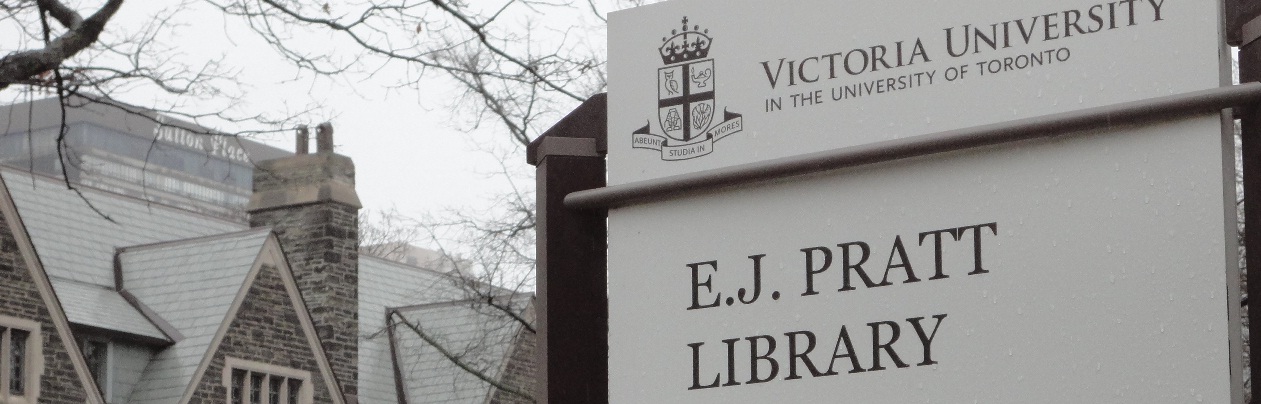
long ago, while visiting the E.J. Pratt Library at the University of Toronto, I
noticed the area in the building I might naturally call reference or the catalogue
had been renamed. It’s no longer a humble catalogue, but a rather grandiose information commons instead. A little
while later, I noticed the same terminology at the Toronto Reference Library.
That vast, computer bank filled with folks watching YouTube? Toronto’s
information commons.
The
commonality of information is indisputable, isn’t it? There it is, all around
us like air. But using the term information
commons within a library is a political choice; it’s a declaration. It has
its roots in the idea of a village commons, a plot of land that is not subject
to private ownership, but instead is for the use of all citizens. A park, for
instance.
Parks are
nice. They make us feel good about being part of society, like we’re all
sharing something. Declaring the presence of an information commons is like
saying “Come on in, lie down on the grass, bring your dog. No-one can stop you
from using this space or the information you find here.” Ironically, at U of
T’s main branch, Robarts Library, the commons has been corporatized. Our common
information at Robarts comes to us courtesy a sponsorship from Scotiabank, an
entity created by and dedicated to the concept of private ownership.
This
particular renaming undoubtedly has a lot to do with the fact that library
spaces are now heavily connected to the outside world. Whereas the good old
catalogue (card- or computer-based) was in place to tell you what information
(i.e. writing) was available in the library itself – what had been acquired,
collected, curated and stored within the actual brick and mortar building in
which you were standing – now every computer terminal in every library in every
city in the world has access to all of world knowledge through the connected
tubes of the interweb.
Does that
mean my iPhone is an information commons as well? If so, why bother with
libraries at all? Let’s just make sure everything is available digitally, and
we can tear down all those dusty old buildings. One library is good enough if
it contains all of world knowledge and can be carried in my pocket. Give it a
funny name and a colourful logo and no-one will ever have to suffer the
humiliation of a public shushing again.
Digital
utopian and free culture theories [i] depend
heavily on the idea of the Internet being common ground, despite a great deal
of evidence and practice proving otherwise (try to replicate and use Google’s search
algorithm on the Internet, for instance – see how common that information is).
What any of that has to do with the function of a library is a bit mysterious. I’m
hoping we’re seeing a temporary fad take hold – like calling any combination of
two things a “mash up” – and that soon we’ll all tire of the digital utopian
lexicon and get back to calling things by their proper names. We may get a warm
feeling from the idea of libraries as infoparks, but we’re fooling ourselves if
we think that’s what they actually are.
Getting Lost in the Library
Nicholson Baker’s brilliant 2001 exposé, Double Fold: Libraries and the Assault on Paper,
detailed the scandalous destruction of many thousands of books and newspapers
in American library collections during the microforming craze of the late last
century. Libraries were sold on vast microforming schemes as a means not just of
preserving old, crumbling paper texts, but of saving space within the physical
collections themselves. Many American libraries even agreed to turn over
physical inventory with no intention of ever getting it back intact. Books had
their spines guillotined and their guts removed for quicker copying, entire
runs of newspaper were quickly photographed and then destroyed.
The libraries retained tiny photographs of
their former collections on acetate – a technology that proved over time to be
riddled with preservation and documentation errors, was tricky to keep properly
stored and catalogued, and would often corrode faster than the old paper it was
meant to replace. Many microform collections quickly succumbed to “vinegar
syndrome,” a condition every bit as bad as it sounds. Double Fold won the 2001 National Book Critics Circle Award for
Non-Fiction, and made quite a few enemies for Nicholson Baker in the
information sciences.
Many in the worlds of research, writing and
publishing are wondering if Canada is right now experiencing its own Double Fold moment. After a chaotic
decade of amalgamation, restructuring, staff changes (downsizing) and shifting
collection policies, our national memory bank, Library and Archives Canada has
begun to fast track a project involving the mass digitization of their current
holdings. As in the microforming debacle that preceded it, this new mass
scanning and storage is being contracted to an outside supplier, in this case
an online repository and subscription service called Canadiana.org.
News reports from early in the summer of
2013 had Canadiana.org scanning our publicly held archival collection in
exchange for proprietary copies of all materials processed, which Canadiana
would then load with metadata – the essential cataloguing and searching
functionality that any national archive worth its salt is supposed to provide –
and offer it back to the public, for a fee, through premium subscription
services. What was once planned as a free service for all Canadians will now
cost us upwards of $100 each.
The uproar from the cultural sector was
predictable, resulting in the immediate postponement of the mass digitization
project, presumably until better optics could be arranged. Strangely, about the
only culturally-based organization not
to voice concern over this privately arranged shift in ownership of public
records was the Canadian Library Association. In fact, the CLA wrote a public letter [ii]
of strong support, essentially quoting from Canadiana’s own project bumpf,
while all but abdicating the traditional work and responsibility of public
libraries:
“Those
who provide financial support to this project will have the added value of
access to the metadata…”
To be
clear, all Canadians have already provided “financial support to this project,”
and there would be no metadata from which to extract “added value” without the
essential gift of all the public documents that make up the bulk of the
collection. What is being proposed is extra
pay for standard service. What’s
more, it is being described by its defenders as simultaneously a common good
and a premium value-add.
Canadiana.org
appears, at least, to be a non-profit consortium of libraries and universities.
Nevertheless, it is decidedly not
Canada’s national archives – an institution into which the Canadian taxpayer
has already invested many millions of dollars on the understanding it would
preserve, organize and make freely available our national documentary heritage.
Lost in
all of the fuss over the Canadiana deal is any sense of what will happen to the
physical collection once mass digitization and metadata attachment is complete.
Digitization is easily mistaken for preservation in such schemes. A scanner copies
a physical document; it does not preserve that document. Will we still bother
to keep and properly store our precious documentary history once we get copies
of it all in a hard drive? Recent reports of books and paper collections from
Canada’s contracting network of science libraries being discarded and
dumpstered suggest we don’t value the hard copy as well as we should. [iii]
“Like
Nature,” writes Alberto Manguel in his exquisite love letter to book
collecting, The Library at Night [iv],
“libraries abhor a vacuum, and the problem of space is inherent in the very
nature of any collection of books… ultimately, the number of books always
exceeds the space they are granted.”
One
wonders if the universal access promised by digitization is so tantalizing to
libraries because they are simply running out of shelf space.
The Myth of the Universal Library
The best-known version of the “let us help
you preserve your collection by copying it” sales pitch is Google’s scanning deal
with a consortium of public and university libraries called HathiTrust. The
search engine gargantua continues to do all the heavy lifting (literally) of
hauling millions of books off the shelves, scanning them, storing the digital
files and then returning the books to their home libraries. In exchange for
this work, the libraries allow Google to keep a digital copy of each of the
scanned books, and use those copies in its own online library called Google
Books.
Despite all the coded language of universal access and common information sharing surrounding that project, many
argue Google’s interests are private and entirely commercial. In the era of big
data, more equals money, and Google layers its profitable (and proprietary)
search architecture on top of those millions of library books, something no
other company is allowed to do. What’s more, it remains an open legal question
whether or not Google or the libraries have the right to carry out this work in
the first place, since vast numbers of the books in question remain under
copyright protection, and no good faith attempt was made to secure permission
for the copying from the authors. These matters remain before the courts. [v]
Will the libraries and archives actually
achieve the goal of universal access to their collections through their deals
with Google or Canadiana.org, or will they merely provide unparalleled access
for restrictive commercial enterprises, and transactionally-dependent access
for the rest of us? LAC and Canadiana.org insist that Canadians will only have
to pay the premium price for our historical record for a decade or so, but
that’s cold comfort for those wanting access right now (say, the octogenarian
ex-soldier working on her memoirs). Since much of the material in the LAC
collection remains under copyright, it’s also entirely likely that some
Canadians will be forced to pay for digital access to their own writing. Welcome
to the commons everyone! Hope you brought your wallet.
The dream of a universal library is not
new, but for some reason it can become an obsession that encourages pretty
awful behaviour. The ancient library of Alexandria apparently benefited from a
royal proclamation requiring all ships visiting the Egyptian port to surrender
their books for copying into the library collection. Often, the more handsome originals
were not returned.
Rising Up From the Commons
I love
libraries. Few physical spaces draw me with such intensity as the stacks, reading
rooms and study carrels of a really great library. I go to libraries when I’m
on vacation – simply cannot walk past the 42nd Street library in New
York City without wandering in for a couple hours of reading or writing, or for
no purpose at all. Did you know that a huge cistern used to stand on that block
of Manhattan, providing drinking water to the city? I do know that, because I
read about it… in a library. The Croton Distributing Reservoir used to hold
upwards of 20 million gallons of water. It was torn down sometime in the late
1800s, replaced by the now familiar Beaux-Arts building and its adjacent Bryant
Park.
The main
public library branch in downtown Seattle is a wonder to behold, with precious
foggy daylight streaming through massive slanted windows framed by redwood
beams in the upper floor reading rooms, suggesting both mountain and forest
vistas of the great Pacific Northwest. When I was there this past winter a man
approached me, said he was from Alaska, and just kept shaking his head as he
looked around the room, taking in its grandeur. “I’ve never seen anything so
beautiful,” he told me.
Even the
humble little Aurora Public Library, my old suburban hometown haunt from the
70s and early 80s, squat and ugly and utilitarian, with a weird cold war
air-raid siren installed right by the front door – even that place felt more
special than any other spot in that sad little town.
These
three buildings have almost nothing in common architecturally, nor in the
atmosphere they provide to those who use them. Yet they all have one very
important thing in common. They exist because our world contains writers, and
those writers create the books, magazine and journal articles that make up the
core of a library’s collection.
Let me
make a bold and not very populist suggestion. Libraries are not about
commonality; they’re about exceptionalism. Or, at least, they’re supposed to
be.
Why does New
York City protect the entrance to its library with lions? Because only the
brave should approach such a building, only those willing to find and absorb
and at least attempt to understand the wisdom therein. Walk through the information commons in any university or
public library these days and you are likely to see a student catching up on
some Netflix or updating Facebook. Something essential about these spaces has
been flipped on its head. Serious research of actual information is often now
secondary to entertainment. Is that really what we want from our libraries?
Philanthropist, Andrew Carnegie is widely
considered the father of the modern public library. One might be tempted to
think of Carnegie’s generous grants to build libraries across the continent as
some sort of democratizing gift to humanity - to the commons. Of course, by day
Carnegie was a union-busting industrial capitalist with little time for common
folk (or, at least, the common folk who expected union wages and benefits). His
vision of the purpose of these libraries is clear and unequivocal. They are for
the “industrious and ambitious; not
those who need everything done for them, but those who, being most anxious and
able to help themselves, deserve and will be benefited by help from others.” [vi]
Can I walk into the Vancouver Public Library
(another spectacular building) and walk out with a copy of one of my own books?
No, I cannot. They have my books (thanks Vancouver!), but if I want to read
them at the VPL, I will have to actually stay within the friendly confines of
the VPL. Not being a resident of Vancouver, I cannot get a Vancouver Public
Library card [vii],
and you sure do need one of those to borrow a book from there. VPL, like every
other public library you will enter these days, enforces control over its
collection with sophisticated surveillance and electronic security measures. Strike
one against the idea that libraries are for everyone. They are for everyone resident in the municipality on
which the library depends for tax revenues.
The same goes for university libraries,
like the Pratt in Toronto, where I do a great deal of my own writing. In many
university libraries, I’m free to wander through the stacks and take books back
to a study carrel for my immediate use. As long as I don’t leave the building,
I can touch whatever I want (and touch it I do). But this is certainly not true
for Robarts Library, the monolithic, turkey-shaped building at the corner of
St. George and Harbord. The stacks at Robarts’ infopark are guarded by
electronic gates and card-checking technology. The last time I was in that
corporately-sponsored commons, I was watched very closely by a uniformed
security guard. Never mind taking the books out of the building, if you want to
even see most of the books in the
Robarts collection, you will need to be a tuition-paying student at the University
of Toronto [viii],
one of the more exceptional, expensive and exclusive schools in North America. It’s
all very nice and democratic sounding
for libraries to promise universal accessibility, but they don’t really mean it [ix],
and maybe that’s ultimately a good thing.
I don’t make these observations out of any
Randian insistence on keeping the rabble away from the good stuff, and I’m as
likely to lean toward Antonio Panizzi [x] as
Andrew Carnegie for my essential understanding of and belief in the purpose of
libraries – Panizzi, the Principal Librarian of the British Museum Library
famously declared it was the government’s responsibility to make sure the poor
and rich had equal access to his collection. That said, the job of providing
access is nowhere near as easy as opening a door, and it carries with it an
immense responsibility.
The elitism of the U of T library system
serves an essential purpose for that system and for the public and private
donations on which it is built. If anybody could walk into Pratt or Robarts and
remove any book they like whenever they like, there would very soon be far
fewer books in Pratt and Robarts. Protecting and preserving the collection they
have is as much the job of a library as is building the collection in the first
place. In fact, library workers should want to control access as much as they want to provide it. Otherwise, they are working themselves out of a job. And
library workers have an essentially important job. They are the highly educated
human conduit between some wonderful new tools (digital text, metadata, search
algorithms, etc.) and the collections of human work to which they will be
applied.
Schemes like Google’s library-scanning and Canadiana.org’s
archive-scanning put the metadata first, the search second, and the people third
(or lower), all the while making disingenuous promises about being stewards of
the information commons. If we are
building a universal library, it’s one designed with plenty of cloud-based
servers and wired conduits, but precious few human-sized doors and climate-controlled
storage rooms. Let’s leave the information commons where it belongs, with the
digital utopians, and instead let’s expect of our libraries the real, human
work for which they are uniquely suited. We can start by using the proper names
for things as they are.
[iv] p. 66, The Library at Night, by Alberto Manguel,
Knopf Canada 2006.
[v] Full disclosure: My day job is as
executive director of the Writers’ Union of Canada, one of the named plaintiffs
in the current HathiTrust legal proceedings in the US.
[ix] I can’t even get past the home
screen on a “commons” computer terminal without entering a U of T access code.
[x] Thanks to Nigel Beale for pointing me in
the direction of Panizzi through his article, “Empty Archives: Reflections on
an Institution in Crisis,” pp. 18-21, in the Summer 2013 issue of Write magazine (the member publication
of The Writers’ Union of Canada).